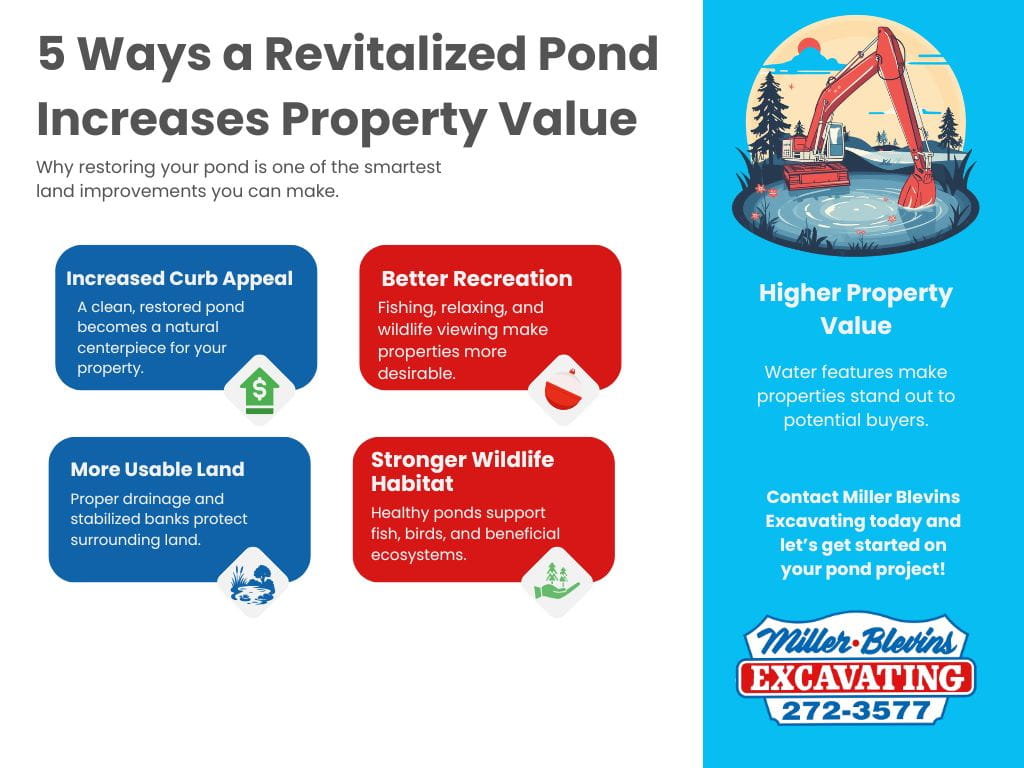
For many rural and semi-rural properties around Branson, a pond is much more than a simple water feature—it’s an important part of the landscape and a valuable asset. A well-maintained pond can provide recreation, attract wildlife, and create a peaceful focal point for your land. When properly cared for, it can also increase the overall value and appeal of your property.
However, ponds naturally change over time. Sediment gradually builds up, water quality can decline, and erosion around the banks may begin to affect the pond’s structure. What was once a clear and inviting pond can slowly turn shallow, murky, and overgrown.
That’s where professional pond revitalization comes in. Restoring a pond through dredging, reshaping banks, and improving water management can dramatically improve both its appearance and functionality. For landowners, this investment often translates directly into increased property value and improved enjoyment of the land.
Below are five important ways a revitalized pond can make your property more valuable.
1. Improved Curb Appeal and Visual Beauty
When it comes to property value, first impressions matter. A clean, healthy pond can become one of the most attractive features on a piece of land. Clear water reflecting the surrounding trees, neatly shaped banks, and well-managed vegetation create a peaceful and scenic environment that immediately enhances the look of the property.
Unfortunately, neglected ponds often develop problems that hurt curb appeal. Murky water, algae blooms, muddy shorelines, and overgrown weeds can make the entire property feel poorly maintained. Even if the rest of the land is beautiful, a deteriorating pond can quickly become an eyesore.
Pond revitalization restores the visual appeal by removing accumulated sediment, cleaning up the shoreline, and improving the overall water quality. In many cases, reshaping the pond banks and managing vegetation creates a much more balanced and attractive landscape. Once the restoration is complete, the pond often becomes a centerpiece of the property, offering a tranquil setting that adds character and charm.
2. Better Recreational Opportunities
One of the biggest advantages of having a pond on your property is the recreational potential it offers. A healthy pond can provide years of enjoyment for property owners, families, and guests. Fishing, kayaking, wildlife watching, or simply relaxing near the water can all make a property feel more like a private retreat.
However, when ponds become shallow due to sediment buildup, they often lose much of their recreational value. Fish populations may decline, water quality can deteriorate, and thick vegetation may make it difficult to access the water. Over time, the pond may become more of a maintenance burden than a feature to enjoy.
Revitalizing the pond can bring these opportunities back. Restoring the proper depth helps support healthier fish populations, while improving water circulation and quality creates a better environment for both people and wildlife. Once revitalized, the pond can once again serve as a gathering place where property owners can fish, relax, and enjoy the outdoors.
For potential buyers looking at rural properties, the presence of a well-maintained fishing pond or scenic waterfront area can be a major selling point that sets the property apart from others.
3. Increased Usable Land and Property Functionality
In addition to improving the look of your property, restoring a pond can also improve how the surrounding land functions. Over time, poorly maintained ponds can create problems that affect nearby areas of the property. Erosion along the banks, leaks in the pond structure, and uncontrolled runoff may lead to muddy ground or flooding.
These issues can reduce the amount of usable land around the pond and even threaten nearby structures or landscaping. In some cases, sediment buildup can spread beyond the pond itself, affecting drainage patterns throughout the property.
A professional pond revitalization project often addresses these structural concerns. Repairing the pond dam, reshaping banks, and improving drainage can stabilize the entire area. Proper grading and erosion control help ensure that water flows correctly and that the pond works with the natural landscape rather than against it.
By solving these underlying problems, pond restoration can make surrounding land more functional for recreation, livestock, farming, or future development.
4. Stronger Wildlife and Ecosystem Benefits
Healthy ponds naturally support thriving ecosystems. When water quality is balanced and the pond maintains adequate depth, it becomes an ideal habitat for a variety of wildlife. Fish populations can flourish, waterfowl may visit regularly, and frogs, turtles, and beneficial insects often become part of the environment.
However, as ponds age and sediment accumulates, these ecosystems can begin to decline. Excess nutrients in the water may lead to algae blooms, while shallow water can limit the habitat available for fish and aquatic plants.
Revitalizing a pond can restore ecological balance by improving oxygen levels, removing excess sediment, and creating better habitat conditions. In many cases, strategic placement of underwater structures or vegetation can enhance fish populations and attract more wildlife.
For many landowners in the Ozarks, having a property that supports abundant wildlife adds significant enjoyment and appeal. Buyers interested in outdoor lifestyles often place a high value on land that offers natural beauty and ecological diversity.